Plant water stress and drought
Drought is one of the most severe climate-driven threats to ecosystems and society, with far-reaching ecological and socioeconomic consequences. Effective mitigation depends on both accurate forecasting and understanding of drought impacts on ecosystems. Our group develops interpretable deep learning models to identify and predict drought events, while also leveraging plant hydraulic and dynamic vegetation models to quantify how soil and atmospheric dryness constrain evapotranspiration, reduce productivity, intensify competition within plant communities, and elevate the risk of tree mortality.

Representative publications:
Liu, Y., Kumar, M., Katul, G. G., Feng, X. & Konings, A. G. Plant hydraulics accentuates the effect of atmospheric moisture stress on transpiration. Nat. Clim. Chang. 10, 691–695 (2020).
Liu, Y., Holtzman, N. M. & Konings, A. G. Global ecosystem-scale plant hydraulic traits retrieved using model–data fusion. Hydrol. Earth Syst. Sci. 25, 2399–2417 (2021).
Liu, Y. et al. Increasing atmospheric humidity and CO2 concentration alleviate forest mortality risk. Proc. Natl. Acad. Sci. U. S. A. 114, 9918–9923 (2017).
Warming impacts on Arctic-boreal ecosystems
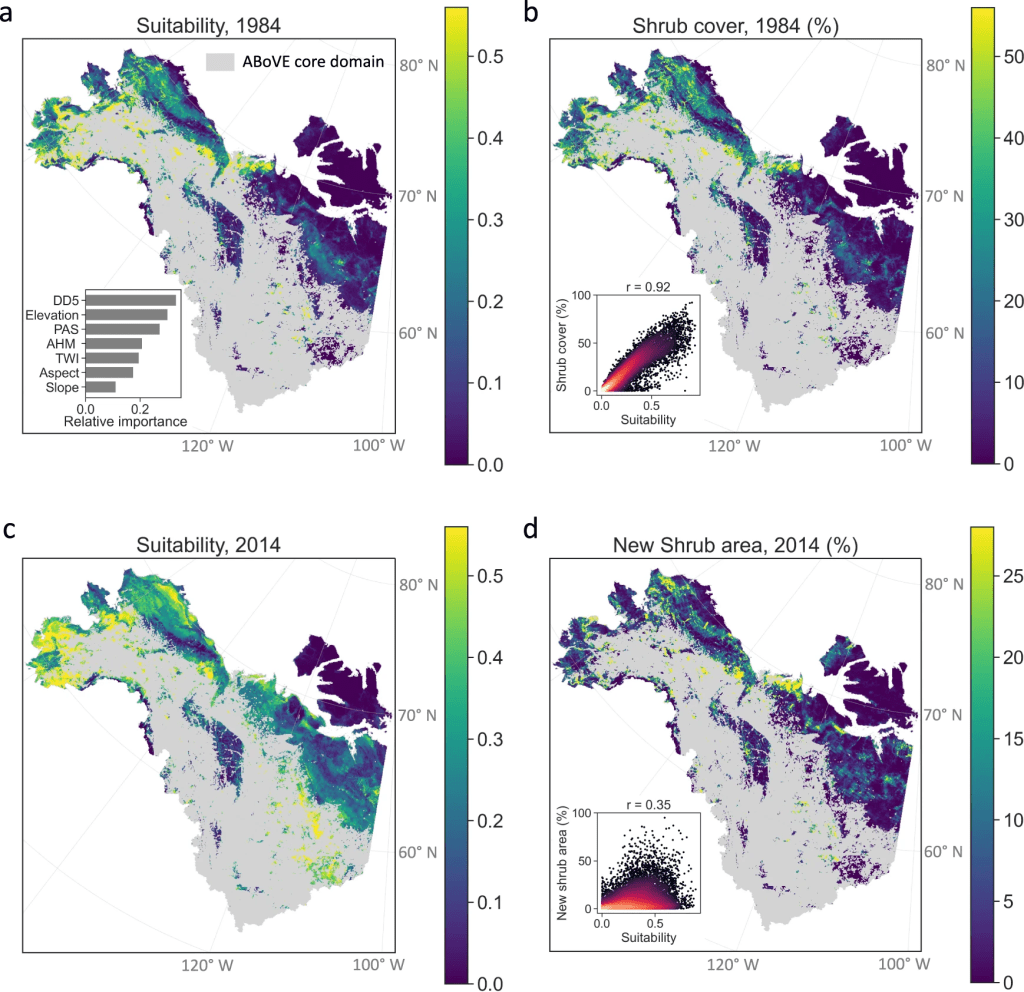
The Arctic boreal region is warming at a rate two to four times faster than the global average, triggering fast and widespread vegetation shifts—including woody plant expansion, transitions from evergreen to deciduous species, and increasing forest mortality. Our research seeks to unravel the drivers and consequences of these changes using remote sensing and dynamic vegetation modeling. We focus on characterizing the demographic dynamics of Arctic boreal ecosystems in response to warming and wildfire disturbances, and assessing their cascading impacts on regional water, carbon, and energy cycles.
Representative publications:
Liu, Y. et al. Dispersal and fire limit Arctic shrub expansion. Nat. Commun. 13, 3843 (2022).
Liu, Y. et al. Large divergence of projected high latitude vegetation composition and productivity due to functional trait uncertainty. Earths Future 12, e2024EF004563 (2024).
Ecosystem resilience and tipping point
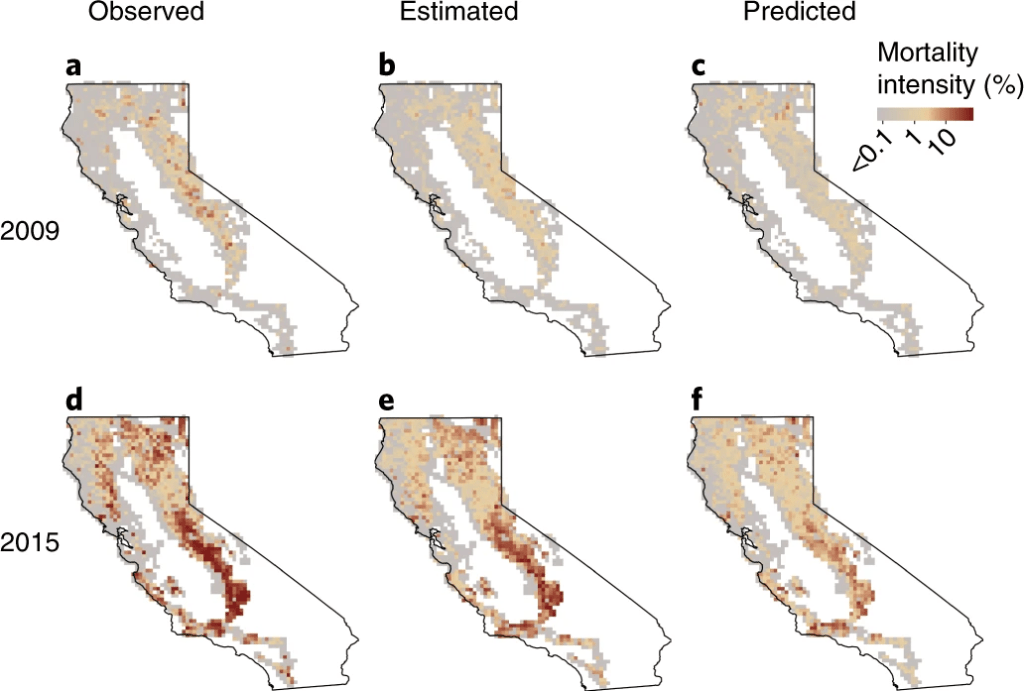
The capacity of ecosystems to mitigate climate change depends on their resilience—their ability to recover from disturbances and climate variability, and to avoid crossing critical tipping points that could trigger widespread forest loss. Our research leverages remote sensing and advanced data analytics to quantify ecosystem resilience under shifting climate conditions and increasing fire disturbances. By uncovering the mechanisms that govern resilience, we aim to improve predictions of climate-induced tipping points and strengthen our understanding of ecosystem stability in the face of long-term global change.
Representative publications:
Liu, Y., Kumar, M., Katul, G. G. & Porporato, A. Reduced resilience as an early warning signal of forest mortality. Nat. Clim. Chang. 9, 880–885 (2019).
Zhang, Y. et al. Warming and disturbances affect Arctic-boreal vegetation resilience across northwestern North America. Nature Ecology & Evolution 8, 2265–2276 (2024).
 yanlanliu.com